
Introduction
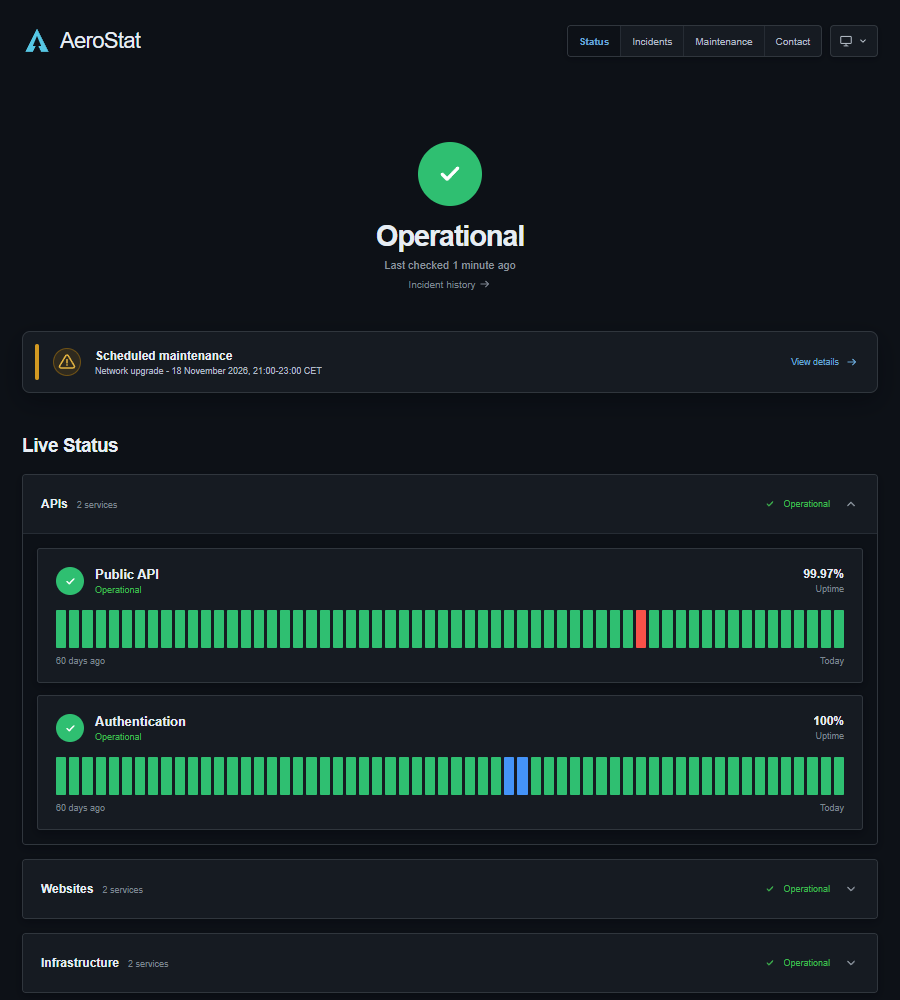
AeroStat is a self-hosted status page. It checks your websites, APIs, servers and DNS, shows visitors how they are doing with daily uptime bars, and lets you post incidents and planned maintenance from a small admin panel at /manage.
It runs on your own server with Docker: a Rust backend, a Next.js frontend, Postgres and Redis. You configure it with a single .env file.
Features
- A public status page with daily uptime bars for the last 60 days, incidents and maintenance
- Checks over HTTP(S) with status codes and keywords, TCP ports and DNS records, plus a warning before an HTTPS certificate runs out
- Incidents and maintenance with their real start and end time
- Notifications on Discord, by email and in a bell in the panel
- Users, roles and admins with fine-grained permissions and an activity log
- Passkeys, two-factor sign-in and security emails
- Backups every day and before every update, with restore from the panel
- A public JSON API and SVG badges
- Light and dark mode, and times in the visitor's own timezone
- Link previews for Discord, Slack and social media that show the live status
Screenshots
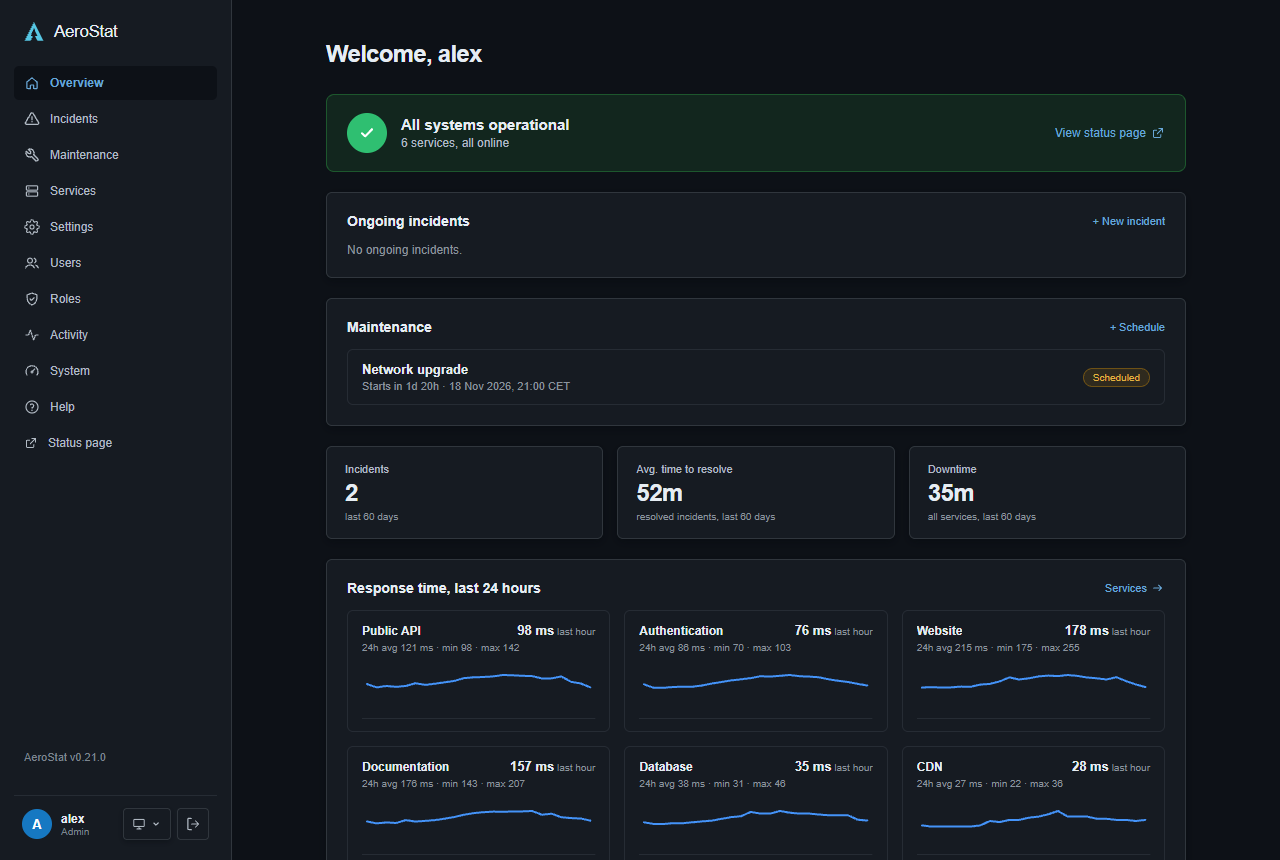 | 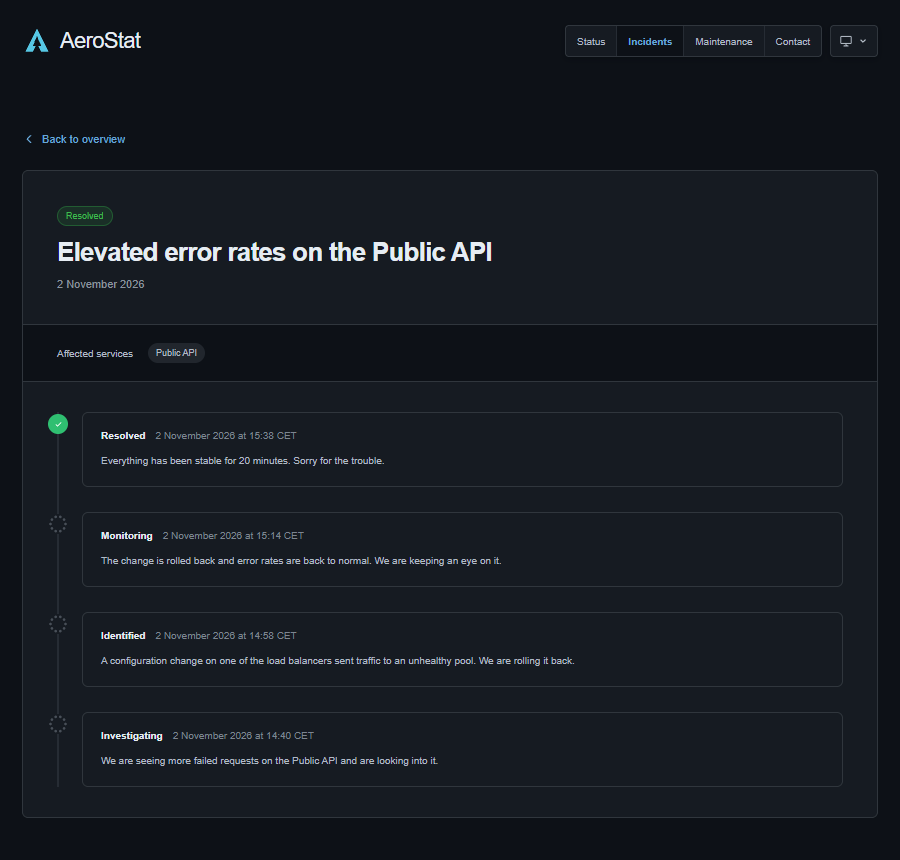 |
| Admin dashboard | Incident timeline |
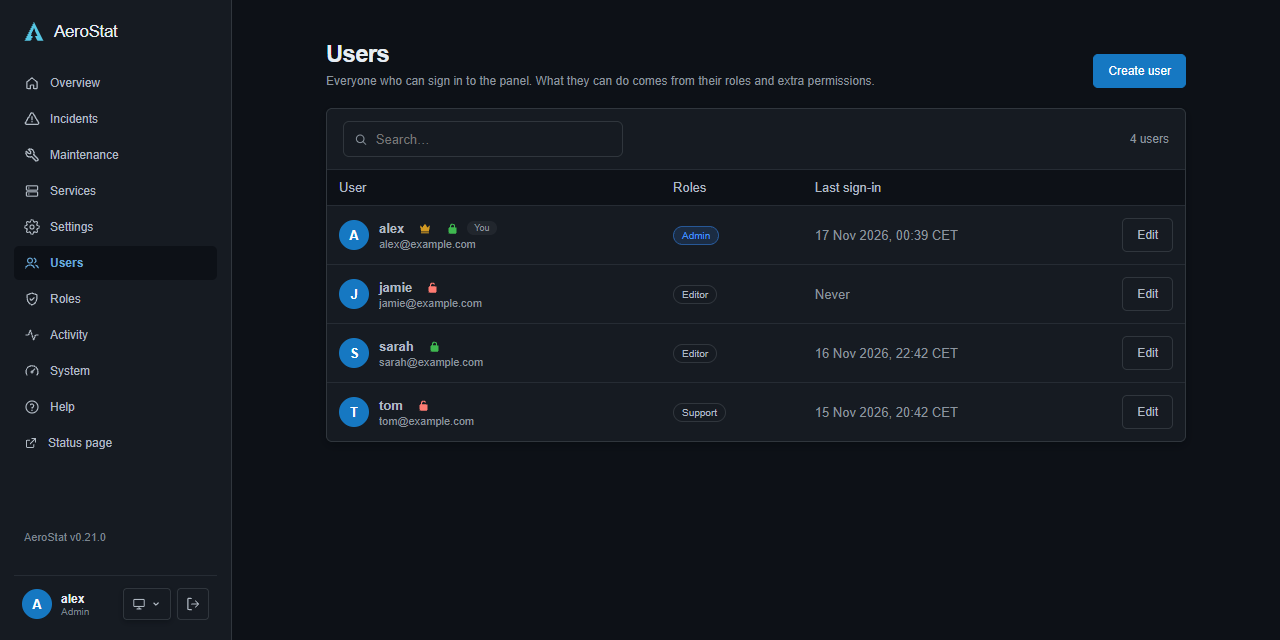 | 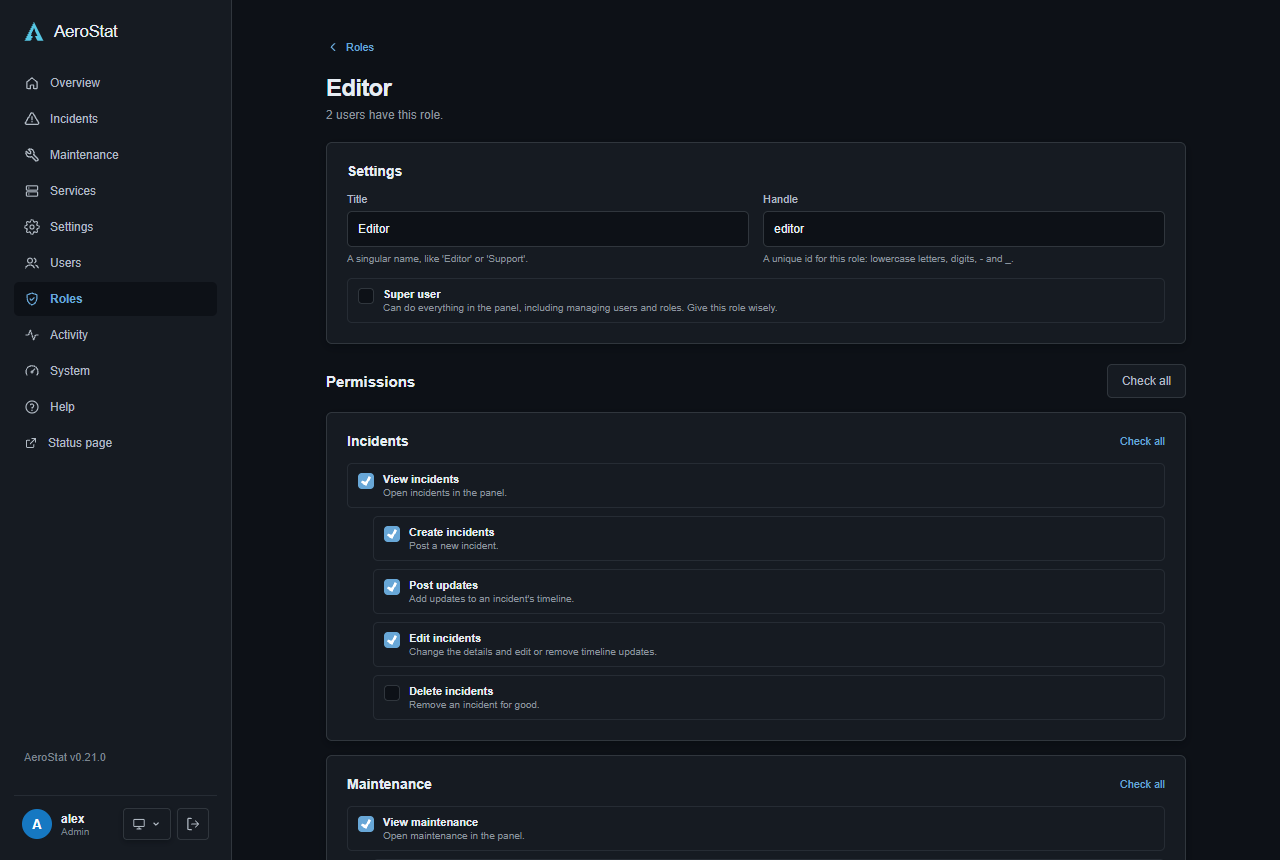 |
| Users and their sign-in security | Permissions per role |
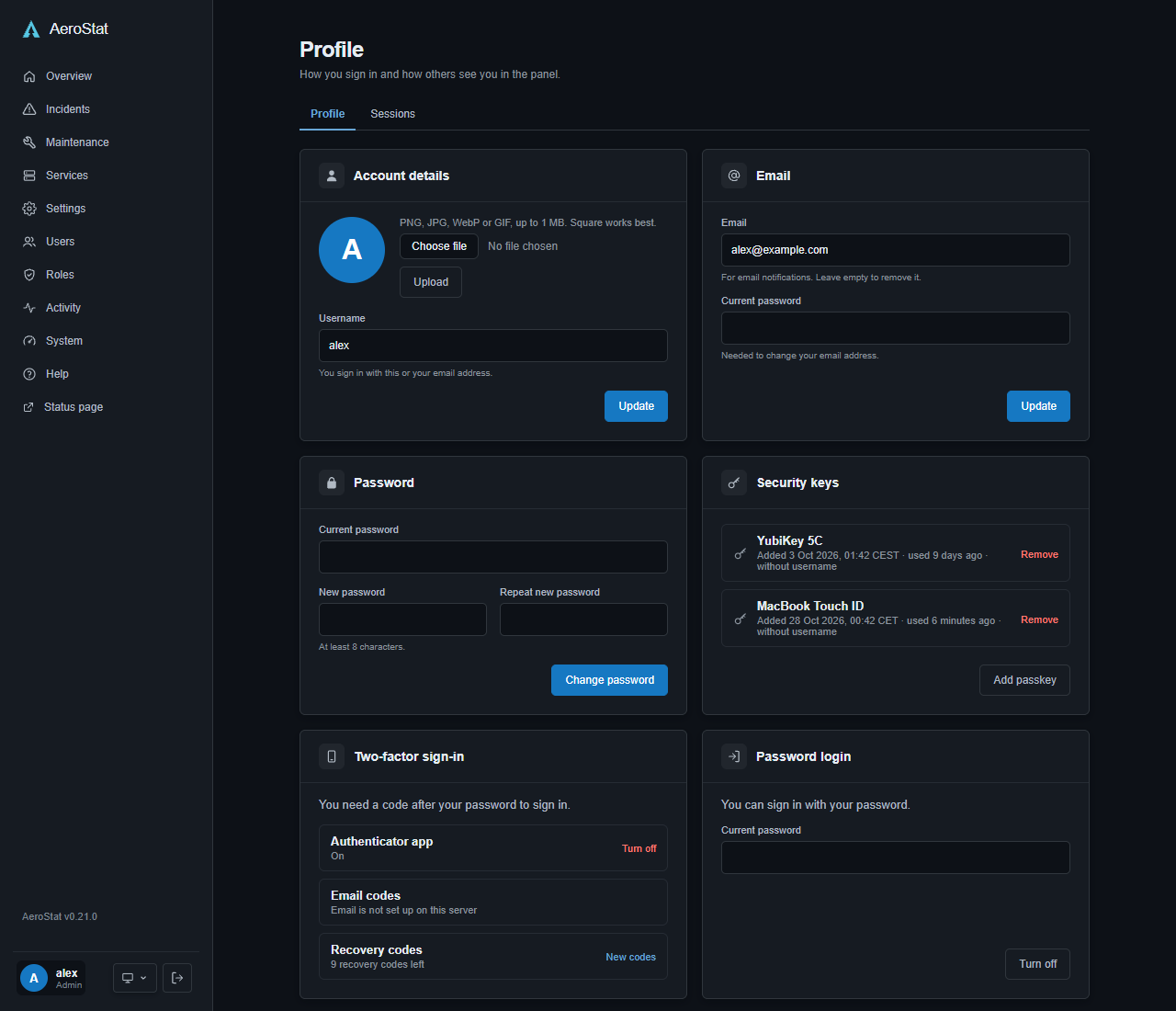 | 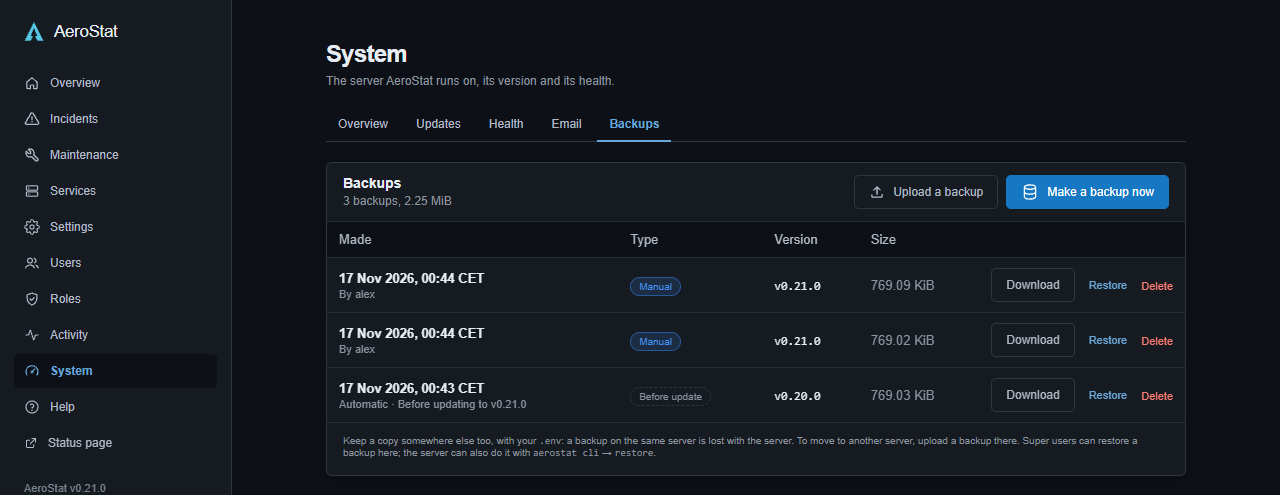 |
| Passkeys and two-factor sign-in | Backups |
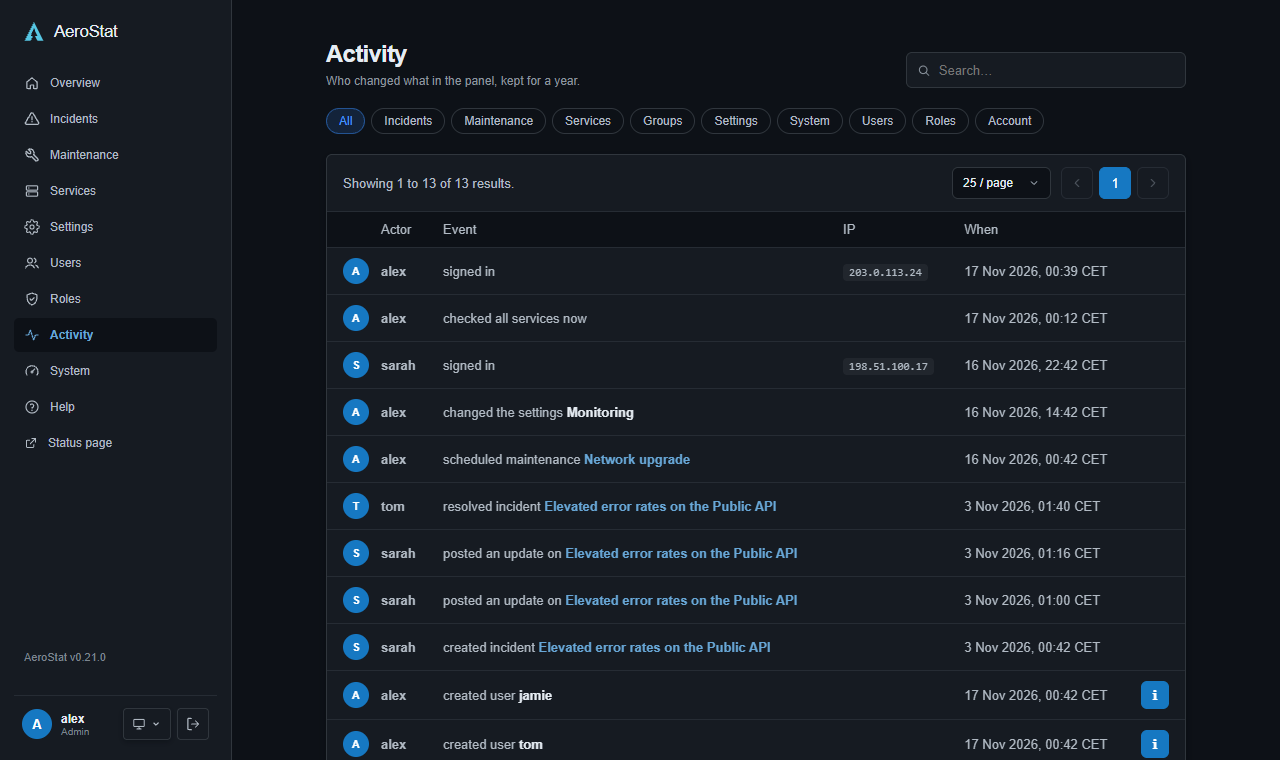 | 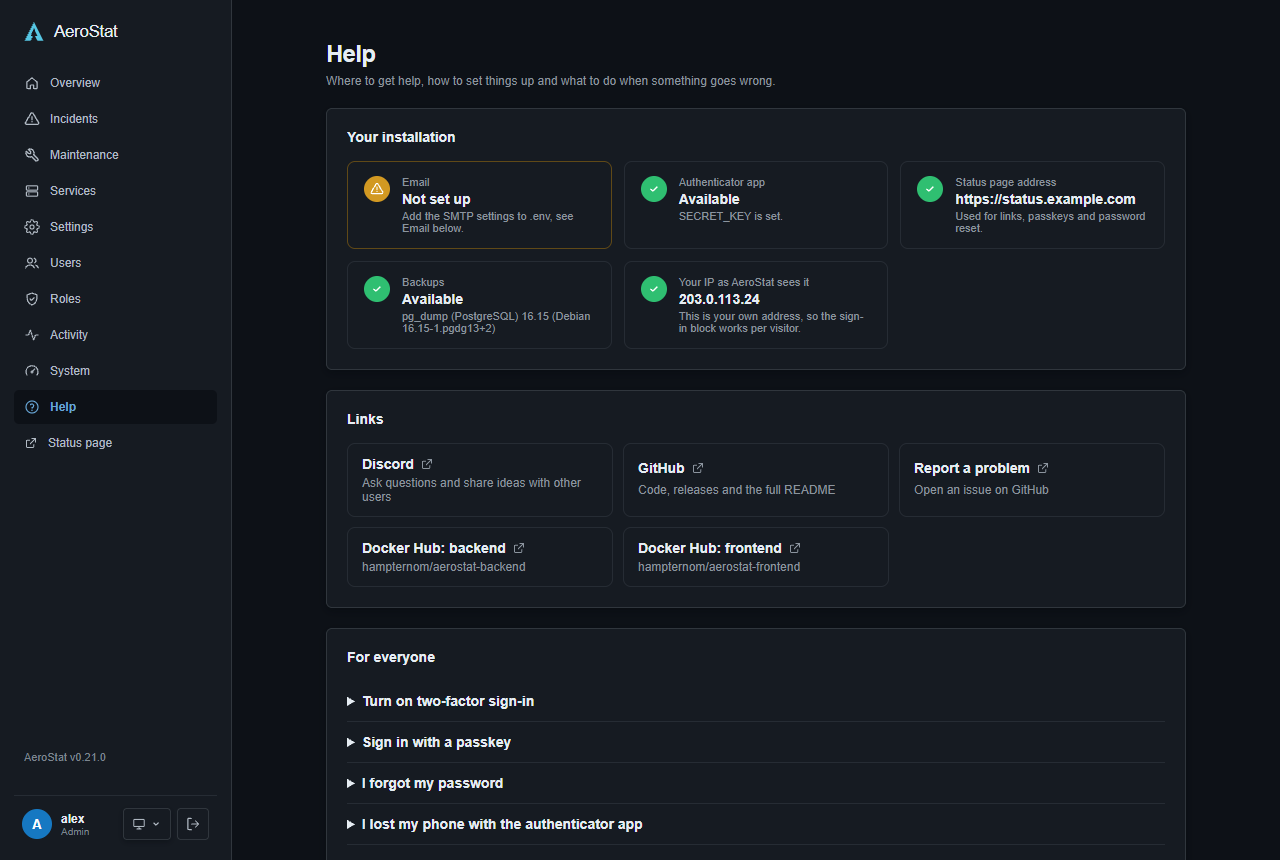 |
| Activity log | Help and install checks |
Run it somewhere else
A status page can't report an outage of the server it runs on. If AeroStat and your services share a server, a crash or network problem takes them all down at once and nobody gets a notification. Run AeroStat on another server, ideally with another provider or in another region than the services it watches. A small VPS is plenty.
Ready? Go to Installation.